

The Democratic Republic of Congo (DRC) is facing many problems. Because of the mineral-rich soil, there are many countries interested in this part of Africa. And that causes ongoing conflicts with many armed groups fighting each other, resulting in many problems for the population. One of those problems is the registration of newborn children.
Normally, children are registered when they are born in the hospital or at home. This registration, although a simple act in itself, is vital during the rest of a child’s life. It provides an identity, but also a document that is necessary to be able to register for school, obtain identity papers and register for a job. However, according to data collected by UNICEF, only 40% of children have their birth registered. Because of the decades-long conflict, birth registration is not always possible, for various reasons: people have to flee, papers get lost or the hospital lacks the supplies or personnel needed for registration.
310 new birth certificates
The Help a Child team in DRC decided, together with the local authorities, to help children to get registered, even when they are already somewhat older. This includes an investigation to check facts provided by the children and their caregivers, but after that they get this important document: the birth registration. Since then 310 birth certificates have been rendered, giving these children a good start in life.


Nemba and Sebele are villages in the areas of Baraka/Fizi and South Kivu in DRC. Both villages have difficulty accessing clean water. In response to this problem, the Help a Child programme put in place a photovoltaic well tap to provide relief for the inhabitants.
A photovoltaic well system consists of an electric motor pump under a system of solar panels producing energy that turns the motor to bring water up from eight metres underground to the reserve tank, where it is piped to the two standpipes that provide access to clean water in the community.
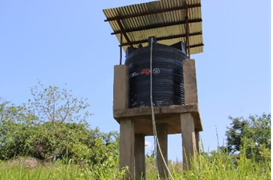

Munyonge Rachid, President of the Water Committee of Nemba, demonstrates the newly constructed well. “This well is of great importance to us. Before we put this well in place, the people of Nemba and Sebele used to get water from this same place; however, it was an open hole and very risky. To draw water, you had to put rope on a container, plunge it into the hall until water is reached and then bring it back to the surface. Most of the time these containers gave way and fell in, and the inhabitants lost a lot of things inside which caused the water to change colour and resulted in constant sickness amongst our habitants. Now we are so grateful to have access to clean water for everyone.”

We are proud to let you know that we have published our first consolidated evidence review of our Empowered to Protect (E2P) approach, which we implement in the Democratic Republic of the Congo and Burundi.
E2P is Help a Child’s community-based intervention for the prevention of gender-based violence. The initiative revolves around interactive group sessions where participants are encouraged to delve deeply into the root causes of gender-based violence. The program can be combined with distribution of non-violent self-defense tools called the INVI-bracelet to be used as last resort prevention when an attack is already happening.
The critical examination of social and cultural norms and practices raises awareness for gender-based violence, empowering both men and women of the community to recognize and tackle these issues proactively. Through E2P, participants become agents of change in their own environment by making them aware of the ways that they can prevent and respond to gender-based violence, fostering resilience and increasing feelings of safety. It is part of Help a Child’s holistic approach to work for the good of children, families and the entire community.
This paper is not only a summary of our past projects, but a collection of evidence of the impact of E2P, recommendations and lessons learned during the innovation journey.
[button_primary link=”http://dev.helpachild.org/wp-content/uploads/2024/07/Evidence-E2P-Report-2024.pdf”]Read our evidence review report[/button_primary]