
Healthcare within reach: an IDP family’s story
Every morning, before the sun fully rises over the IDP settlement in Baidoa, Safiya, a 25-year-old mother of four, begins her day thinking about how she will provide for her family. Life is not easy and jobs are not available. With no stable source of livelihood for the family, Safiya must do casual jobs such as doing laundry or cleaning to supplement her husband Hussein’s unstable income. This is the only way they can ensure their children have food to eat.
When their youngest child, two-year-old Nasra, fell ill, the family became worried. What started as a fever quickly became more serious. Nasra stopped eating solid foods because swallowing had become painful. She cried from severe headaches, spent most of her time sleeping, and seemed too weak to play or even sit up for long. “Seeing my daughter like that broke my heart” Safiya recalls. “She was usually active and playful, but suddenly she had no energy and as a mother, I was very worried.”
Despite their concerns, Safiya and her husband delayed seeking medical care. The thought of visiting a health facility felt overwhelming since they depended on daily wages, and losing even one day of work could mean going without food for the family. They somehow imagined that their little girl would simply recover with time.
A neighbour by the name Aisha soon learnt about Nasra’s illness and encouraged Safiya to take her to the Medair-supported Wasila Health Facility located within the settlement. She explained that the facility opened from 7:00 a.m. to 5:30 p.m., making it possible even for busy community members to seek care before or after attending to their day-to-day jobs.
“Aisha told us we still had enough time to take Nasra to the clinic and then continue to our jobs,” says Safiya. “Without her encouragement, we would have waited even longer.”
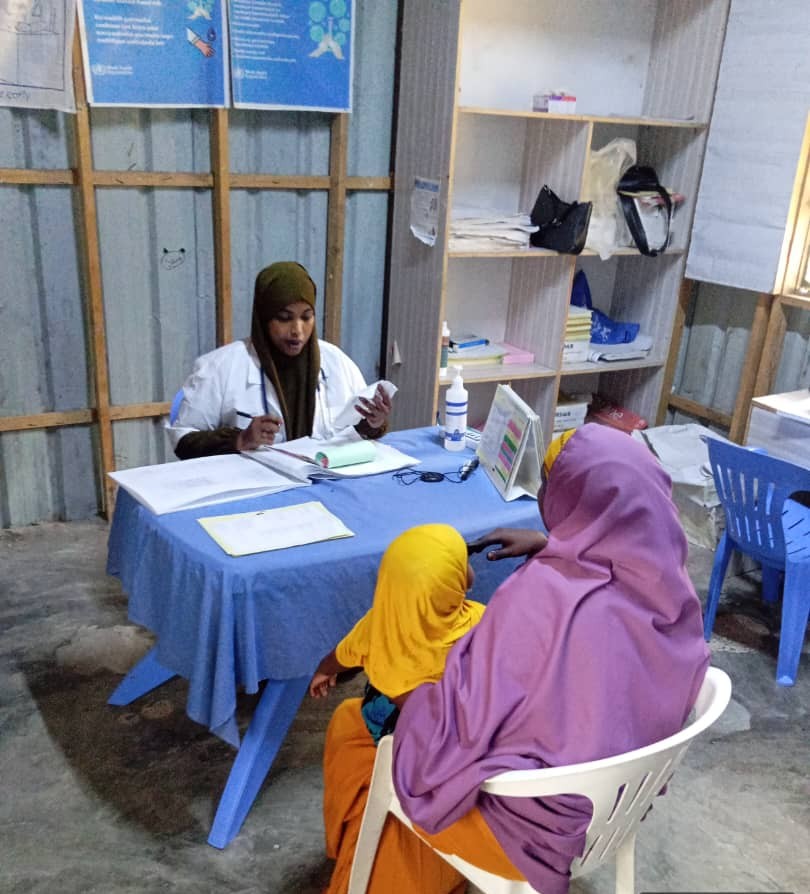
The following morning, the couple took Nasra to the facility. There, she was examined by the Under-5 Nurse, who quickly identified the problem: severe tonsillitis. She explained to Safiya and her husband that the infection was responsible for Nasra’s fever, headaches, weakness, and inability to swallow food comfortably.
The nurse prescribed some medicines and carefully explained how each medication should be given. At the pharmacy, the instructions were repeated to ensure Safiya fully understood the correct dosage and treatment schedule.
From the health facility, Safiya returned home with her ailing daughter, determined to follow every instruction, while her husband still had enough time to report to work. The couple had discussed and agreed that Safiya takes a couple of days to nurse and monitor Nasra, while Hussein continues to his daily livelihood hustle and put food on the table.
“I wanted my daughter to get better as quickly as possible, so I did exactly as I was instructed. My husband also kept reminding me whenever it was time for Nasra to take her medicine” she says, adding that she found it easy to give her daughter the medicine because they were all syrups which Nasra could swallow easily.
Within three days, the change was evident. The medicine had worked like magic. Nasra’s fever had disappeared. The headaches were gone. She could swallow food again and was beginning to ask for proper meals. Her energy returned, and the little girl who had been lying quietly in bed was once again smiling and playing.
For Safiya, the relief was huge. “When I saw her eating again, I felt so happy,” she says with a smile. “The fever was gone, and she was becoming herself again. I thank God, the health workers, and everyone who made this service available for families like ours.”
What made the experience even more meaningful for the family was that the treatment was absolutely free of charge and they did not have to sacrifice their entire fragile income to access healthcare.
“We often have to make difficult choices because every day of work matters,” Safiya explains. “We paid nothing and clinic’s early opening hours allowed us to take Nasra for treatment in the morning and still my husband managed to report to his casual workplace on time, otherwise we would have gone to bed hungry. That made a huge difference for our family.”
Today, Nasra is healthy and thriving once again. Her story is a reminder of how accessible, community-based healthcare can remove barriers that often prevent vulnerable families from seeking treatment. Through support to the Wasila health facility, Medair is helping parents like Safiya access timely care for their children, ensuring that illness does not force families to choose between health and survival.
Related news
Healthcare within reach: an IDP family’s story
Every morning, before the sun fully rises over the IDP settlement in Baidoa, Safiya, a…
Essential support for SGBV survivors
In the Oicha Health Zone, many women and girls who have survived Gender-Based Violence…
Foster families protecting hope during Ebola outbreak
During a period marked by the Ebola outbreak, unaccompanied and separated children were…