Keeping girls in school through dignity and menstrual health
For many girls in South Sudan, menstruation is more than a monthly health experience. It can become a serious barrier to education. When girls lack appropriate menstrual materials, clean water, private sanitation facilities and accurate information, they may experience discomfort, anxiety and embarrassment. These challenges can reduce their participation in class, contribute to school absence and eventually place their education at risk.
The wider education situation makes these barriers particularly urgent. According to UNICEF, more than 2.8 million children, representing over 70 per cent of school age children, are out of school in South Sudan. Girls constitute the largest affected group.
A joint statement from UNICEF and UNESCO also reported that 63 per cent of schools in South Sudan were without latrines, while 52 per cent had limited or no access to safe drinking water. These conditions make it particularly difficult for adolescent girls to manage menstruation safely and privately while attending school.
Supporting 100 girls across six schools
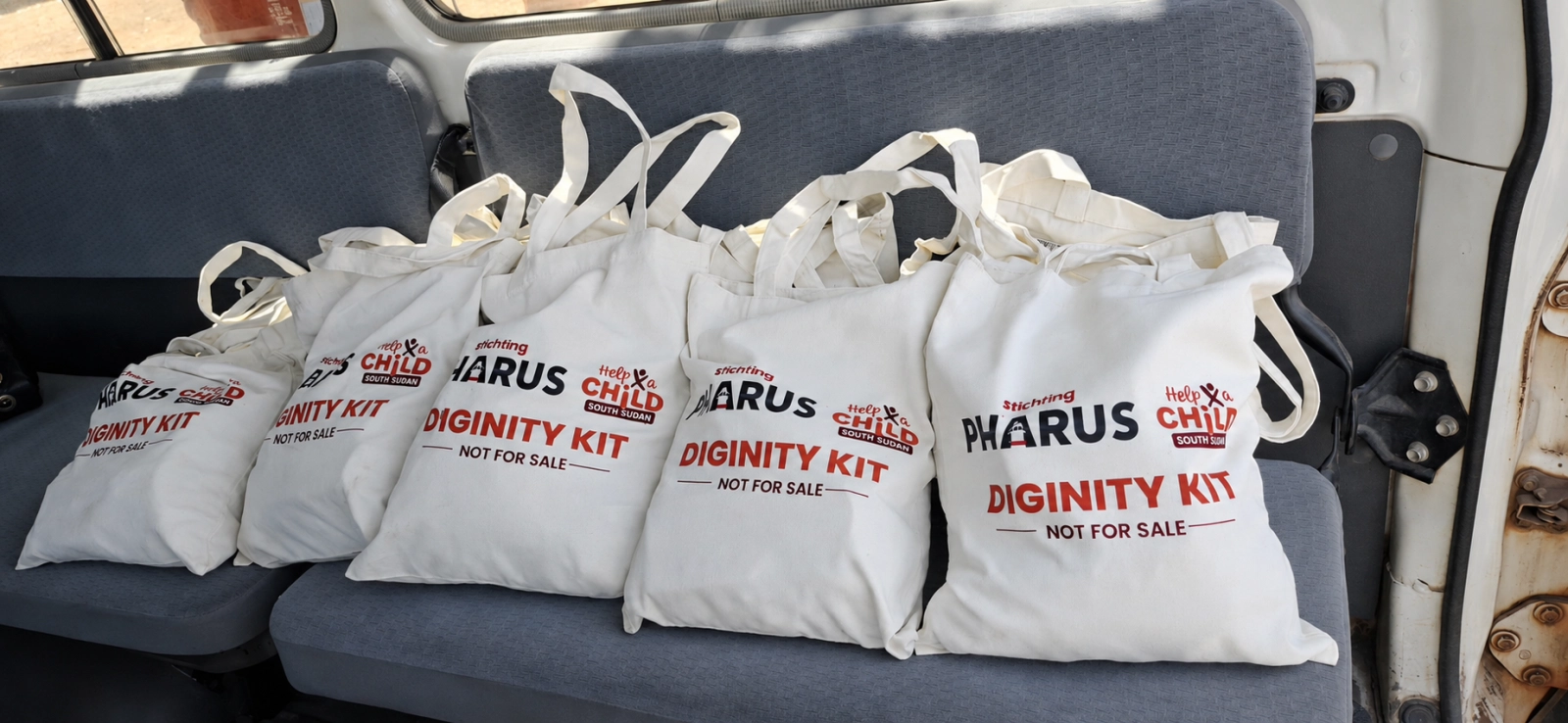
As part of our mandate to promote inclusive and equitable education, Help a Child South Sudan, with support from Stichting Pharus, provided dignity kits to 100 schoolgirls across six schools in Aweil Centre Town, Northern Bahr el Ghazal State.
The dignity kits contained essential menstrual hygiene materials to help the girls manage their periods safely and confidently. This practical assistance enables them to remain in school, participate more comfortably in lessons and focus on their education.
The intervention responds to a wider challenge affecting girls across the region. According to UNICEF, only 12 per cent of schools in sub Saharan Africa provide menstrual materials for free or for purchase. Only 11 per cent have bins for menstrual waste in girls’ toilets. Globally, just 39 per cent of schools provide menstrual health education.
These figures demonstrate that menstrual health cannot be treated as a secondary issue. It is closely connected to girls’ dignity, wellbeing, participation and right to education.
Listening to the voices of girls
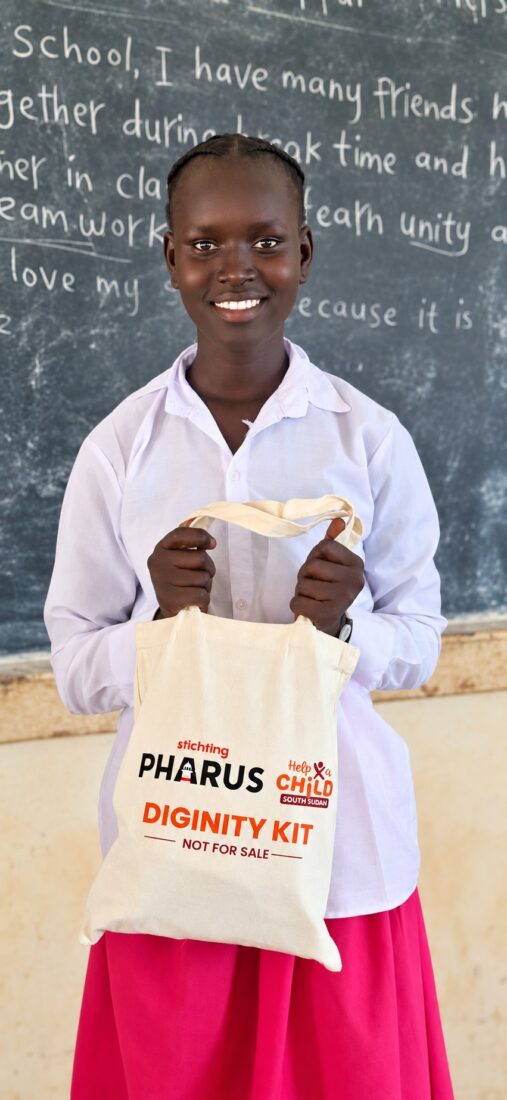
During the activity, the girls shared how limited access to menstrual materials can affect their confidence and ability to attend school. They also expressed appreciation for the dignity kits and explained how having the necessary supplies helps them feel more prepared, comfortable and able to concentrate on their lessons.
Their experiences remind us that programmes designed to support girls must also listen to girls. Their voices provide valuable insight into the barriers affecting their education and should inform the decisions of schools, communities, government institutions and development partners.
Every photograph taken during the activity represents a real person, a powerful voice and a lived experience. Ethical communication requires us to listen attentively, obtain consent, protect dignity and present each story with accuracy and respect.
The girls should never be portrayed only through the challenges they face. Their strength, confidence, resilience and aspirations must remain at the Centre of every story.
More than essential supplies
A dignity kit is more than a collection of menstrual hygiene materials. For a schoolgirl, it can mean attending school during her menstrual period, participating in lessons without fear of embarrassment and managing menstruation safely and privately. It can also help her protect her health, maintain her confidence and continue learning without unnecessary interruption.
Keeping girls in school requires more than classrooms, teachers and textbooks. It also requires safe sanitation facilities, access to clean water, affordable menstrual materials, accurate health information and supportive environments where menstruation can be discussed without fear or shame.
Menstrual health is an education issue
Menstrual health is directly linked to educational access, participation and retention. When a girl misses lessons because she cannot manage her period safely, she loses valuable learning time. When this happens repeatedly, it can affect her performance, confidence and chances of completing school.
Supporting menstrual health is therefore an essential part of advancing girls’ education. It helps ensure that a natural biological process does not determine whether a girl attends class, participates in school activities or achieves her ambitions.
A Shared Responsibility
– Creating supportive school environments for girls requires collective action.
– Schools need clean water, safe and private toilets, appropriate waste disposal facilities and teachers who can provide accurate menstrual health information.
– Families and communities must challenge the stigma and harmful beliefs that cause girls to feel ashamed of menstruation.
– Government institutions, humanitarian organizations and development partners must continue investing in sustainable menstrual health solutions that address both immediate needs and long term barriers.
– Help a Child South Sudan deeply appreciates Stichting Pharus for supporting this intervention and investing in the dignity, wellbeing and education of girls in Aweil Centre Town.
– Providing dignity kits to 100 schoolgirls across six schools is an important contribution. However, continued investment and collaboration are needed to ensure that every girl can manage menstruation safely and continue her education with confidence.
– When girls receive the support they need, they are better able to remain in school, develop their potential and build a brighter future.
– Menstruation should never stand between a girl and her education.
Recommendations
– To sustain the progress made, Help a Child South Sudan recommends continued investment in menstrual health programmes across schools in Northern Bahr el Ghazal State. Support should extend beyond the distribution of dignity kits to include regular access to menstrual materials, safe and private sanitation facilities, clean water, appropriate waste disposal systems and accurate menstrual health education.
– Schools should establish confidential support mechanisms that allow girls to access emergency menstrual supplies when needed. Teachers, parents, boys and community leaders should also be engaged in awareness activities to reduce stigma and create a supportive environment for girls.
– Government institutions, schools, humanitarian organizations and development partners are encouraged to strengthen coordination and mobilize resources to expand menstrual health interventions to more schools. Regular monitoring should also be conducted to assess changes in girls’ attendance, classroom participation, confidence and overall wellbeing.
– Sustained action will help ensure that menstruation no longer interrupts learning or prevents girls from completing their education.
Related news
Healthcare within reach: an IDP family’s story
Every morning, before the sun fully rises over the IDP settlement in Baidoa, Safiya, a…
Essential support for SGBV survivors
In the Oicha Health Zone, many women and girls who have survived Gender-Based Violence…
Foster families protecting hope during Ebola outbreak
During a period marked by the Ebola outbreak, unaccompanied and separated children were…